
#ReadYourWorld Day: Stories That Name Us, Hold Us, and Help Us Belong
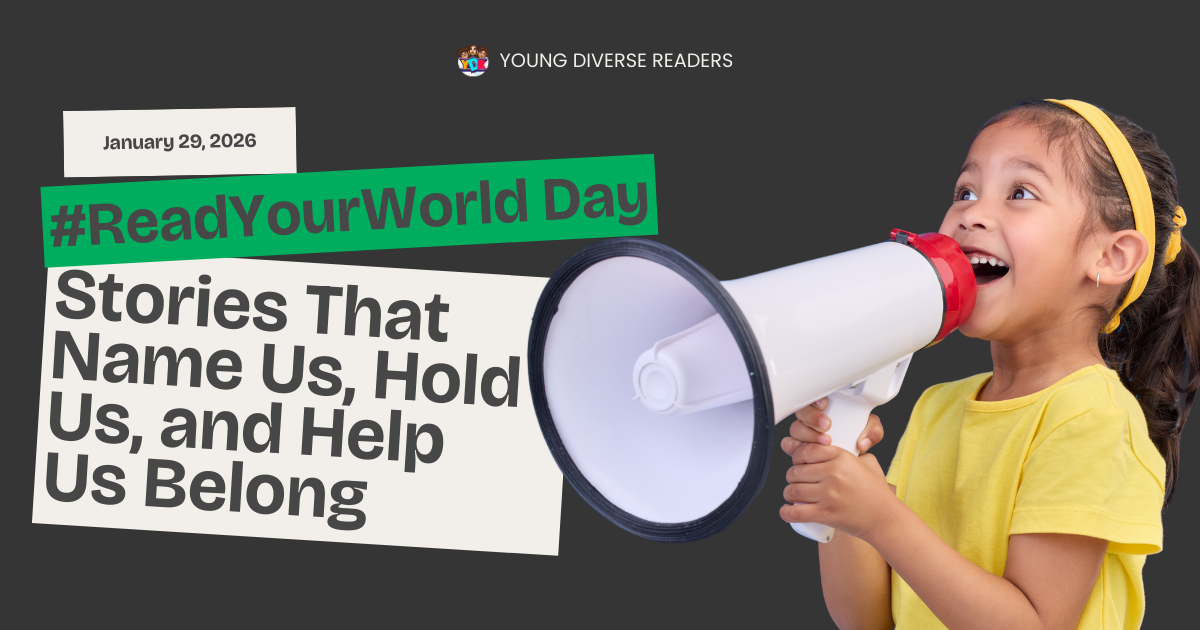
Each year, on the last Friday in January, communities around the world celebrate #ReadYourWorld, formally known as Multicultural Children’s Book Day (MCBD). Founded in 2012 by Mia Wenjen and Valarie Budayr, this global initiative uplifts stories that reflect diverse cultures, identities, languages, and lived experiences, highlighting the transformative power of representation in children’s literature.
For me, Read Your World is more than a celebration; it is deeply personal. Stories are often the first spaces where belonging is either affirmed or denied. When children encounter characters who look like them, speak like them, love like them, or share similar experiences, they receive a powerful affirmation of their identity. That recognition builds confidence and nurtures a lasting sense of belonging.
Equally important, when children engage with stories beyond their own experiences, they cultivate empathy, curiosity, and respect for difference. In such moments, books become bridges, creating opportunities for families and children to experience library joy.
The First Time I Saw Myself in a Book
I vividly remember the first time I encountered a children’s book featuring a character who resembled me. It was 2016, and I was an adult when I read Drum Dream Girl: How One Girl’s Courage Changed Music by Margarita Engle, illustrated by Rafael López, winner of the Pura Belpré Illustrator Award.
For the first time, I experienced something rare in my reading journey: true recognition. Not a stereotype or a marginal presence, but a character portrayed with authenticity and depth. That moment transformed me, not only as a reader, but also as a library professional and advocate for inclusive literature.
Read Your World Day exists to amplify stories like these. Events such as the American Library Association’s 2026 Youth Media Awards further remind us of the profound impact that inclusive narratives can have on young readers and communities.
Voices and Stories That Expand Our World
African American Voices and Experiences
André: André Leon Talley—A Fabulously Fashionable Fairy Tale by Carole Boston Weatherford and Rob Sanders (Reading Age: 4 - 8 years)
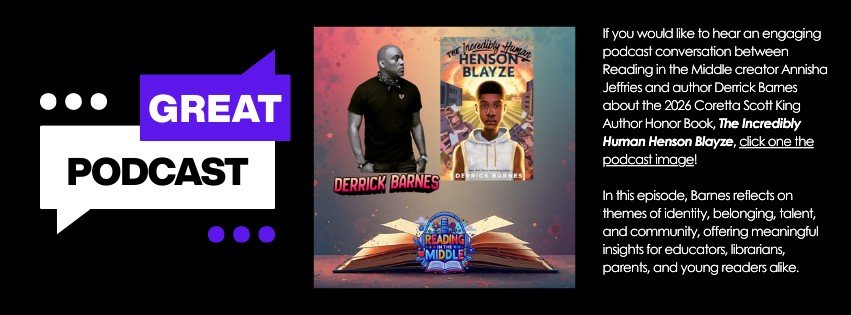
The Incredibly Human Henson Blayze by Derrick Barnes (Reading Age: 10 - 12 years)
The Library in the Woods by Calvin Alexander Ramsey (Reading Age: 7 - 11 years)
Will’s Race for Home by Jewell Parker Rhodes (Reading Age: 8 - 12 years)
Latine Stories
A-Ztec: A Bilingual Alphabet Book by Emmanuel Valtierra (Reading Age: 4 - 8 years)
A Hero’s Guide to Summer Vacation by Pablo Cartaya (Reading Age: 8 - 12 years)
Popo the Xolo by Paloma Angelina Lopez (Reading Age: 6 - 9 years)
A Sea of Lemon Trees: The Corrido of Roberto Alvarez by María Dolores Águila (Reading Age: 8 - 12 years)
Wanda Hears the Stars: A Blind Astronomer Listens to the Universe by Amy S. Hansen with Wanda Díaz Merced (Reading Age: 6 - 9 years)
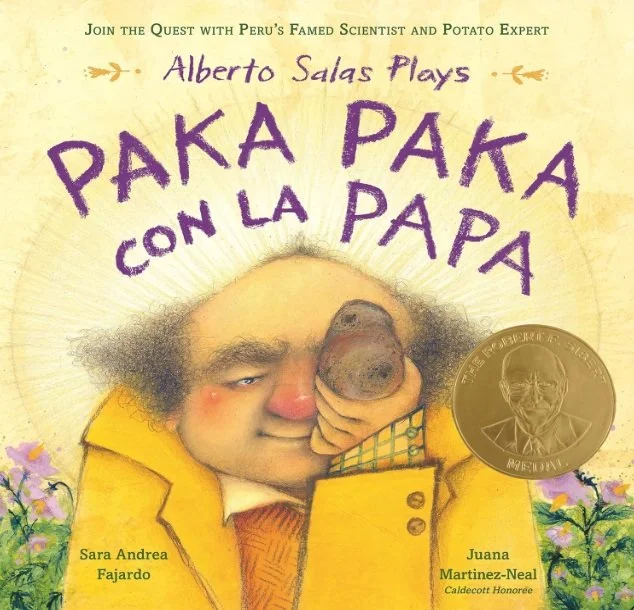
2026 SIBERT INFORMATIONAL BOOK MEDAL WINNER
Alberto Salas Plays Paka Paka con la Papa
by Sara Andrea Fajardo
illustrated by Juana Martinez-Neal
Reading Age: 4 - 8 years
Can a potato really change the world? For Peruvian scientist Alberto Salas, the answer is yes! Embark on an exciting adventure as Alberto searches for wild potatoes before they vanish forever. This playful and inspiring picture book, bursting with the vibrant illustrations of Caldecott-honor artist Juana Martinez-Neal, celebrates curiosity, discovery, and the surprising power of a humble potato.
Download an activity kit and memory card game from MacKids for the picture book by clicking on the link!
LGBTQ+ Representation
Call Me Gray by Andrew Larsen and Bells Larsen (Reading Age: 4 - 8 years)
Halfway to Somewhere by José Pimienta (Reading Age: 8 - 12 years)
Ollie in Between by Jess Callans (Reading Age: 10 - 14 years)
Indigenous Voices
Fierce Aunties! by Laurel Goodluck (Reading Age: 4 - 8 years)
For a Girl Becoming by Joy Harjo (Reading Age: 4 - 8 years)
Raven’s Ribbons by Tasha Spillett (Reading Age: 4 - 8 years)
The Ribbon Skirt by Cameron Mukwa (Reading Age: 8 - 12 years)
Clack, Clack! Smack! A Cherokee Stickball Story by Tracy Sorell (Reading Age: 4 - 7 years)
Jewish Experiences
The Book of Candles: Eight Poems for Hanukkah by Laurel Snyder (Reading Age: 4 - 8 years)
The Keeper of Stories by Caroline Kusin Pritchard (Reading Age: 4 - 8 years)
My Body Can by Laura Gehl (Reading Age: 3 - 6 years)
Asian American, Pacific Islander Narratives
Filo’s Butterflies by Litea Fuata (Reading Age: 4 - 8 years)
Kahoʻolawe: The True Story of an Island and Her People by Kamalani Hurley (Reading Age: 7 - 11 years)
Many Things at Once by Veera Hiranandani (Reading Age: 4 - 8 years)
White Sunday: A Celebration for Samoan Kids by Litea Fuata (Reading Age: 3 years and Up)
Beyond Celebration: A Call to Action
Together, these stories remind us that multicultural literature is not a trend; it is a necessity. As communities, we must move beyond celebrating diversity as an abstract concept and begin embodying it as a daily practice. Multicultural stories are not supplemental; they are essential to justice, identity, and imagination.
May #ReadYourWorld inspire us to read boldly, gift and collect intentionally, and lead courageously, ensuring that every child can find a story that affirms they belong.